
-
By Ian Greenhalgh on July 20, 2016
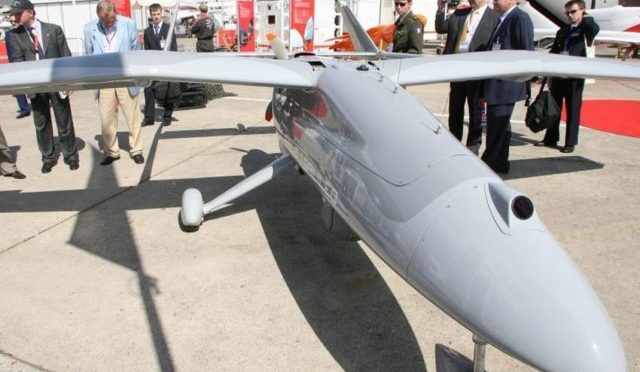
New Russian drones can stay aloft longer and are much harder to detect and destroy
On the face of it, this seems like a nothing story, but it becomes significant when we recall the report earlier this week that Israel tried and failed to shoot down a drone that crossed the Golan Heights and entered Israeli airspace before returning to Syria unscathed by the two Patriot missiles and the Air-to-Air missile fired by a fighter jet that Israel had attempted to shoot it down with.
It would seem very likely that the drone the Israelis were confounded by was one of these new Russian hydrogen powered types and furthermore, these new drones have enhanced capabilities (other than using a new fuel) which have embued them with enhanced survivability while in hostile airspace. One feature that does improve survivability by making the drone less detectable is the lack of a heat signature – a by-product of the use of hydrogen fuel.
FARS
Russian Army Tests Hydrogen-Powered Drones over Syria’s BattlefieldsThe Russian Aerospace Forces tested new hydrogen-powered unmanned aerial vehicles (UAV) in Syria that allows for longer flight times, a high-ranking Russian military official announced.
“All the tested drones have safely returned to Russia for studies on their use in hot climates and sandstorms,” the source told RIA Novosti.
“The drones that have been used in Syria, not all, but there were quite a lot, flew on hydrogen fuel. In other words, they can stay in the air for a long time, allowing the propulsion to replenish energy,” the source said.
According to the source, all UAVs have returned to Russia for analysis of combat data, including performance in sandstorms.
 Conspiracy Daily Update