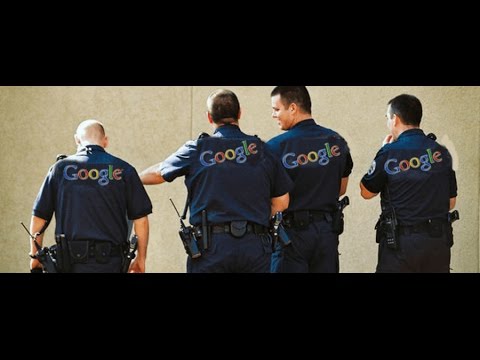
Source: DR WILLIAM MOUNT: Google Hires 10,000 People To Scrub The Net

The time has come for the Harvest that was prophesied. One Taken, the other Left. However, the one taken is not the one who will experience a rapture in energetic terms. No, the one taken is the dark one, who has been judged to not be worthy of the Kingdom of Heaven that will be manifesting upon Earth. The one who remains is the one who will work to manifest it, as well as the golden age. America had the destiny of being an example to other nations with its Constitution and democratic principles. The right conditions will be restored by the One sent for this mission. – Archangel Michael
I confirm through Christine who is one of the emissaries of my divine complement, Archeia Faith, that the population of Earth will be split upon two different timelines, as Michael Love has stated. The timelines will be two different routes that will create distance between those who travel upon them. Only one of them will take those travelers, or initiates, to the Kingdom of Heaven that will be manifested upon Earth and in physicality. – Archangel Michael
:The removal of this darkness is and has been taking place in a gradual manner because so many souls were entangled in the dark pyramid of control of these satanic ones. We had to free them and this caused some changes in the way of their perception and general views, especially with regard to political policies and strategies, which caused wars and prevented peace. From March 20, we benefit from the Council’s heavenly decree to remove these dark powers, and satanic forces, and I will slay their core, that ancient entity which is a collective of evil. – Archangel Michael
The removal of darkness and of all manners of counterfeit creations by these beings who have also attempted to carry out impostures of the Ascended Masters and infiltrate erroneous notions within the ranks of the Lightworkers, will not take place in an instant. No, I have to clarify this. The timelines will be made to diverge on that date given and the process that will follow from this will be gradual. However, if you are looking for proof, you will discover with some inspection, that various strange events, or occurences, will have taken place after that date, and that the world of Science will have received an impetus in an accelerated way towards a delivery of technologies which were previously withheld from the public arena. – Archangel Michael
Wow… lots going on here, and to come…. I have reposted the entire message from Archangel Michael via Christine Preston, below. I have blogged and written about this splitting of humanity, before…
Saturday, March 18, 2017 2:14 (Before It’s News)The Conservative Tribune reports, Fox News commentator Judge Andrew Napolitano dropped a bombshell Tuesday when he said that former President Barack Obama may have used a foreign spy agency to surveil President Donald Trump, a move that would have basically eliminated any trail leading back to the former president’s administration.Andrew Peter Napolitano is the Senior Judicial Analyst for Fox News Channel, commenting on legal news and trials, and is a syndicated columnist whose work appears in numerous publications, such as Fox News, The Washington Times, and Reason.What do you think about this video? Thanks for stopping by! Stay tuned for more breaking news from BIN!
(Matt Agorist) In 2016, during the presidential election, a theory surfaced online of an alleged child trafficking ring operated out of a Washington D.C. restaurant, Comet Ping Pong. The theory, which went viral, claimed that John Podesta’s emails, which were leaked by WikiLeaks, contained coded messages referring to human trafficking. The restaurant theory was debunked and those who supported labeled as kooks by the mainstream media — especially after a man walked into the Comet Pizzaria and fired a weapon. However, although the DC pizza restaurant was never implicated, a very real and very dangerous location, where children were held captive and forced to perform sex with pedophiles, has just been exposed by a recent lawsuit….
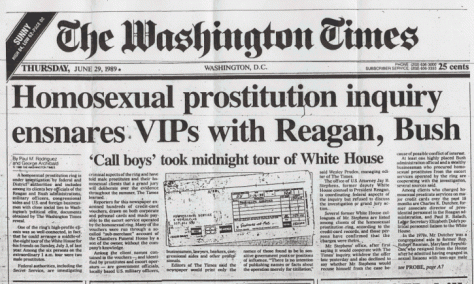
Source: Real-Life American #Pizzagate Exposed, But It’s Not in DC — It’s in Philly | Stillness in the Storm
In this new Linda Moulton Howe video, she talks about of how planet Earth has been the laboratory playground of Ancient Aliens for over 270 million years.
Linda explains Ancient gods and myths are all real – ancient gods were beings with advanced intelligence who visited planet Earth and affected human history, for better and for worse.
In fact, ancient hieroglyphics do appear on modern-day UFOs: “Some people that have worked in these facilities have all talked about ancient hieroglyphics on these crafts.”
Linda Moulton Howe explains UFOs and ET life is a complex, mysterious and difficult topic to investigate and has been kept top secret for purposes of national security.
They take enormous measures to keep it secret, because they really feel that is what is needed to deal with the UFO phenomenon for all of us.
There are good and bad ET species, referred to as “friendlies” and “unfriendlies,” and they are at war in space and on our planet.
. . . AND WE THE PEOPLE ARE BEING ENSLAVED BECAUSE WE AREN’T TOLD THE DEFINITIONS!

The key to the word game is “Person” and it is everywhere in our government and legal system from the federal level to the local level.
All laws and statutes are written for legal “Persons” not flesh and blood living men and women. The difference between the two is as significant as the difference between life and death . . . it’s everything!
legal “persons” can’t walk
legal “persons” can’t talk
legal “persons” have no gender
legal “persons” have no race
legal “persons” cannot reproduce
legal “persons” don’t occupy space
In legal-land, “PERSONS” AREN’T REAL – THEY ARE FICTIONAL!
When the UNITED STATES went bankrupt in the 30s because of the banksters orchestrated “great depression”, so-called “federal” government representatives pledged (hypothecated) the future earnings and productivity of the American people to the banksters as payment of the debt.[i]
hypothecate: to pledge to a creditor as security without delivering, as property.
Franklin Delano Roosevelt (FDR) was put in office in 1933 to administer this new system of government/economics. It was called The New Deal and sold both to Congress and the American people as an emergency solution to a national economic nightmare. The state of emergency declared at the time has been maintained ever since.[ii]
The people’s gold was confiscated and they were given a new currency to use called the FEDERAL RESERVE NOTE, the scrip of the privately owned central bank, the FEDERAL RESERVE. The creation of the US Dollar/FEDERAL RESERVE NOTE actually brought in Rothschild’s New World Order and it was displayed on the one dollar bill in 1935 for all to see..
Source: It Is All a Word Game: Why “Persons” Are Not Real – Prepare for Change
(The Explorer) Various ancient maps discovered throughout time reveal a slightly different reality than what we’ve been accustomed to, with the most astounding find being the continent of Antarctica, mapped by the ancients at a time when this southernmost landmass was free of ice.
Since birth, people are hard-wired to adhere to a dogmatic reality with a narrow view of the world.
As time passes, evidence contradicting this paradigm is brought to our attention, and so we rapidly adjust our way of thinking to a bigger picture that doesn’t appear to be framed, nor acknowledged by modern understanding.
One of the most substantial examples is that of ancient sailors who were apparently able to traverse the planet from one pole to another.
These people had advanced knowledge in many fields, and were able to produce precise charts of the world using an instrument of navigation for accurately determining longitudes that was beyond anything possessed by either of the ancient, medieval, or modern people up until the 18th century.
Because of this evidence that cannot be in any way hindered or disproved, we can assume that a long-forgotten civilization thrived on this earth in remote times.
Evidence is mounting in this direction, and those who reject this hypothesis as mere myth will soon have to rethink and redesign the entire concept of human history.
Among the many paradigm contradicting pieces is the Oronteus Finaeus map. Published in 1531, it displays Antarctica free of ice, together with accurate depictions of rivers, valleys, coastlines, and the approximate location of the south pole.
It also gives the appropriate longitudinal coordinates. Keep in mind that Antarctica was barely discovered (at least by modern standards) in 1773, after Captain James Cook and his crew reached the islands of the Antarctic Circle, but none set foot on the actual landmass until the Norwegian expedition in 1911.
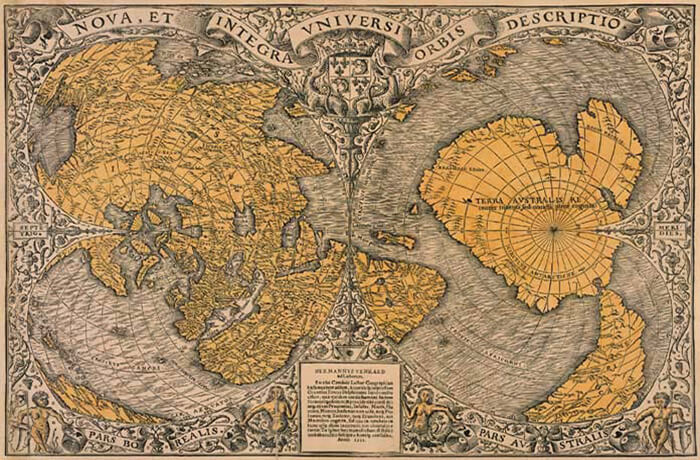
This could mean two things. Either the presented map is an elaborate forgery, and as you’re about to see this comes out of the question, or human beings are once again rediscovering a land and knowledge that was once lost to the infamy of time.This, in turn, adds to a greater pile of ‘controversial’ evidence that hints at the very same thing – the existence of an advanced civilization before or during the last ice age…
Germany will impose fines of up to 50 million euros if Facebook don’t remove alternative news content from their platform.
A new law being drafted will see social media firms face hefty fines if they take longer than seven days to remove content that German authorities deem to be “illegal” – including so-called fake news.
Germany’s justice minister, Heiko Mass, says that social media giants such as Facebook have not done enough to tackle content that the government deems ‘subversive’.
BBC News reports:
The proposal requires sites to run 24-hour helplines and to delete flagged content within seven days.
‘Utterly impossible’
Social media firms such as Twitter and Facebook were getting better at handling illegal content, said Mr Maas, but both had a long way to go.
Mr Maas quoted research which suggested Twitter deletes only 1% of the hate speech it is told about by users, and Facebook, 39%.
“This isn’t sufficient yet,” said Mr Maas.
Racism and hate speech are believed to have become more prevalent on German social media following the arrival of large number of refugees in Germany.
Any content that was “clearly criminal” would have to be removed within 24 hours under conditions outlined in the draft law. If, after an investigation, content is found to be criminal then that must be removed in seven days. The people who posted the illegal content must also be told about its deletion.
The proposed law would require each network to run fully staffed, round-the-clock reporting systems and to name an individual responsible for handling complaints. That person could face an individually levied fine of five million euros if companies break laws governing what can be published.
Mr Maas said the law could apply to fake news articles if they proved to be slanderous, defamatory or libellous.
Facebook did not comment directly on the proposal but said tests it commissioned showed it removed a higher percentage of illegal content than Mr Maas claimed. The social network said it expected to have 700 people employed in Berlin by the end of 2017 overseeing its efforts to review flagged content.
German digital trade association Bitkom criticised the proposed law. It told the Financial Times that the requirement to remove material within 24 hours on sites that handle more than one billion posts per day was “utterly impossible to implement in operational terms”.
Source: Germany Threaten Facebook With ‘Huge Fines’ If They Don’t Remove Alternative News – Your News Wire
When I think back on my freshmen year of college, I think of a lot of imbalance. I remember being a clean freak in my dorm room, an avid yogi, a lover of healthy foods, and appreciative of a good night’s rest. But that was my inner self. The influences around me brought about another side of me that didn’t align with what I knew I needed. The endless pizzas, the lost hours of sleep from countless late-night parties and early-morning laughter — these were all fun, but when I think about it, I didn’t really have any other option. This was the lifestyle all around me, and though I’d sneak off for yoga, or bury myself in the library to study, I was highly swayed by this “fun.” I wonder if, had there been a dormitory at my campus designated for people seeking more balance, I would have chosen it, and if I had, how it would have changed my time.
At the University of Vermont, Burlington, a big dormitory is going up with room enough for 700 students next fall, and it’s designed with the health-conscious in mind.
The clean-living residence hall has zero-tolerance for drugs and alcohol, meaning one mistake and you’re out. But students who live here have access to fitness and nutrition coaches at the in-house gym, free violin lessons, yoga, and mindfulness training.
The worst thing you expect while shampooing your hair, is probably experiencing an eye burn or accidentally swallowing some foam. But, you might want to think again!
The Center for Environmental Health in Oakland, California, conducted a study which showed that the shampoo you use can be harmful to your health.
They discovered the presence of the carcinogen known as cocaminde diethanolamine (cocamide DEA) in at least 98 popular brands of shampoos.
Unfortunately, the dangerous cocamide DEA is present in many common beauty products.
This issue has become so widespread that 4 big shampoo producers received California lawsuit.
Cocaminde diethanolamine is the reason why shampoos are foamy, but it is also a carcinogen compound. According to California proposition 65, manufacturers are supposed to warn their consumers about the potential risks related to substances such as this one.
Once it was discovered that cocamide DEA causes cancer in a laboratory animal research, California even banned this dangerous substance. This happened last year.
And not only cheap shampoo brands use this carcinogenic compound, but also a well-known brands such as Colgate. Although cocaminde diethanolamine was banned in commercial health product, FDA didn’t do much about this problem.
Source: These Illegal Cancer-Causing Chemicals Were Found in These Shampoo Brands! – Prepare for Change
(Jon Barron) You would think that the case against excess sugar in the diet is now clear cut–that the scientific community is lined up against it. You might also think that, as a result, like cigarettes, the consumption of sugared foods and beverages is on the decline. But you would be wrong on both counts. To paraphrase the great Mark Twain, “The Reports of sugar’s death are greatly exaggerated.” And this is especially true when it comes to sugared drinks: sodas, energy drinks, sports drinks, etc.
Like Alice, we are about to go “through the looking glass” and enter a bizarro world where up is down and left is right. We are about to enter the unsettling world of scientific studies where, despite everything you have been led to believe, very little is what it seems. And like Alice, we will start at one point and end at a different point far, far away–before we finally get to return exactly where we started in our normal reality. Our journey will begin with a discussion of sugared beverages and a recent study that says they are still alive and well, totally contradicting everything we thought we knew about changing dietary habits in the United States. But that’s just the beginning. We will very quickly move on to a discussion of the numerous contradictory studies about the effects of sugar–and once again, we will find that everything we thought we knew is contradicted by numerous studies of dubious reality. And ultimately, we will conclude by trying to get a handle on how to deal with all of these contradictions–which will finally allow us to go back through the looking glass to the marginally saner world we know and love….


You may have heard about some of the buzz surrounding fluoride. Its negative effects, according to research, appear to have become severe. The downsides of fluoride use have been brought to light and are now being discussed worldwide. Fluoride is found in many public water products, and may pose some serious health threats. If you’re a bottled water connoisseur, you’ll want to read on.
Experts have been arguing for years about whether or not fluoride in drinking water is toxic to humans. Recent studies have finally shown evidence that it is. Extremely high levels of fluoride have been shown to cause neurotoxicity in adults, resulting in negative impacts on memory and learning. Researchers from the Harvard School of Public Health and China Medical University in Shenyang combined 27 studies, finding strong indications that fluoride also adversely affects cognitive development in children.
A study published in the Journal of Epidemiological & Community Health found that those who consume fluoridated water are more likely to suffer from thyroid issues, which often result in depression and obesity…
Source: Your Bottled Water is Filled With Fluoride! Learn What Brands to Avoid! – Prepare for Change
http://democracynow.org – For the first time, a United Nations agency has directly accused Israel of imposing an “apartheid regime” on the Palestinian people. The report also urges governments to “support boycott, divestment and sanctions [BDS] activities and respond positively to calls for such initiatives.” The findings come in a new report published by the U.N. Economic and Social Commission for Western Asia, which is comprised of 18 Arab states. For more, we speak with the co-author of the report, Richard Falk. He’s professor emeritus of international law at Princeton University and previously served as the U.N. special rapporteur on Palestinian human rights.
The subject of mind control has been keenly contested for some time now. Mind or thought control is broadly defined as human subjects being indoctrinated in a way that causes an impairment of autonomy – the inability to think independently, and a disruption of beliefs and affiliations.
Mind control was initially considered a mere conspiracy theory. During the early days of the term, its adherents believed a human’s mind could be controlled through the dissemination of propaganda messages to suit the person disseminating the message. Even media theories such as Agenda Setting, Framing and Priming supported the notion that the human mind could be controlled to think in a certain direction the media wanted. This, in theory, becomes possible through the messages the media disseminate to the public. As the media constantly bombard people with a specific message or idea, over time, people become addicted to it, adopting it as a reality. Of course, if this happens, it means the thinking faculties of people have been altered.

However, mind control moved from mere communication messages of the media to something deeper after a shocking revelation. In 1999, the forensic psychologist Dick Anthony revealed that the United States Central Intelligence Agency (CIA) invented damning brainwashing techniques against communism during the Korean War…
Hat tip to Washington’s Blog for collating much of this information.
With the recent back and forth seemingly taking place between two different factions of the American Deep State and playing out before the entire country, a few alternative media outlets have begun to question whether or not certain mainstream media outlets are actually connected to the Deep State, most notably the CIA. With an unimaginable scale of disinformation being released and promoted throughout mainstream channels on a daily basis, all propagandizing the public to go along with the desired direction of the American establishment, few could assume otherwise. However, such connections between American mainstream outlets and the CIA are more than mere conjecture, they are well known and have been documented for some time.
For instance, back in the late 1940s and early 1950s, Operation Mockingbird, a plan known to many researchers today but known to virtually no one at the time it was originally being implemented, was a secret CIA effort to influence and control the American media and, thus, to influence and control the information received (as well as the opinions) of the American people. The first report of the program came in 1979 in the biography of Katharine Graham, the owner of the Washington Post, written by Deborah Davis.[1]…
Source: American Corporate MSM Is Merged With CIA And Has Been Since The 1950s – Prepare for Change
by Justin Deschamps
In the latter portion of Benjamin Fulford’s newsletter from the week of March 13th, he described meeting high-level figures in Japan and Asia who revealed the secret religion or beliefs of some of the elite power players on Earth. Apparently, they worship the Black Sun, a negative solar deity that personifies the antithesis of the Creator—a force of death, destruction and chaos instead of life, creation, and order. This is strikingly similar to the satanic Cabal mentioned by several other noteworthy researchers and insiders, such as Mark Passio and Jay Parker.
In the ’90s, Passio was recruited into the Church of Satan by Anton Lavey. Passio thought that Satanism was nothing more than a religion for personal empowerment, but he discovered it was much more insidious than that. And after attending Grotto meetings in the dead of night wherein member lawyers, doctors, and politicians spoke of their abject hatred for the unawakened masses and their continued desire to enslave and torture people, Passio had a change of heart.
Related Former Satanic Priest Exposes the 4 Main Tenets of Satanic Ideology
Parker is a Satanic ritual abuse survivor who was raised in a generational dark occult family. His father claimed to be an Atlantean warlock, and his mother a witch. Both his parents spoke of the religion of the Illuminati, the worship of the Black Sun by the elite, stretching back tens of thousands of years.
Recently, David Wilcock and Corey Goode have claimed that the origin of this dark group traces back to a pre-Adamic period, some 55,000 years ago. Allegedly, a transhumanist cybernetic race of giants warred in the solar system’s distant past, once occupying a planet that was destroyed some 500,000 years ago, now home to the asteroid belt. They fled to Mars after the destruction of their home planet and eventually fled to Earth in a space ark that became the Moon of Earth. Finally, they settled in Antarctica, cannibalizing their motherships, and building several highly advanced civilizations. They interbred with the human elite on Earth at the time, forming what is known today as the Illuminati bloodlines. Whether or not this account is true remains to be seen, but could provide another link in the chain of the hidden history of Earth.
Related The Dragon Bloodlines and the Divine Kingship — Extraterrestrial Origins of Elitism
Related David Wilcock: The Antarctic Atlantis – History of the Illuminati — CLE 2017 Notes: Part 2
According to Passio, the Black Sun represents the dark Lucifer archetype. Lucifer is known as the light-bearer in occultism, the personification of the bringer of truth, wisdom, and knowledge.


PEDOGATE: Alex Acosta’s Nomination for Labor Secretary Must Be Rejected
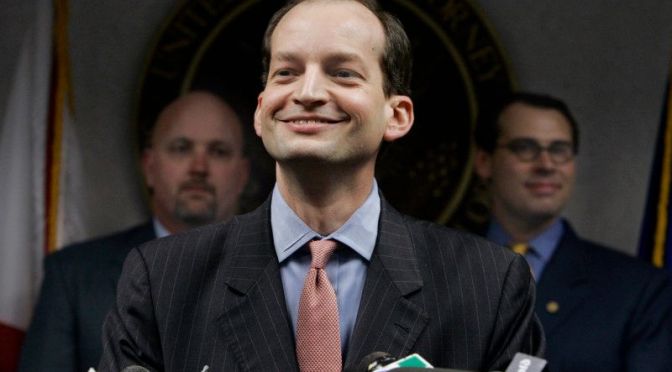
If Alexander Acosta is remembered for one thing throughout his entire law career, it will be his serious mishandling of the child sex case of West Palm Beach billionaire and registered sex offender Jeffrey Epstein.
The Most Radioactive ‘SCANDAL Of The MILLENNIUM’
As U.S. Attorney, Acosta negotiated an unprecedented plea agreement for Jeffrey Epstein in what is now known as one of the most grotesque miscarriages of justice in Florida history. There are attorneys throughout the state who are still seriously questioning (and extremely angry about the trampling of the rule of law) the final disposition of this deliberately bungled case. Some of those attorneys are actually litigating it on behalf of their aggrieved female clients. The details are explained in the article below…
Source: Pedogate Blown Wide Open! Epstein Child Sex Scandal Implicates Labor Nominee! | Politics
Thursday, March 16, 2017 8:50
(Before It’s News)
Source: Israeli News Live: The Fallen Angels Imprisoned in Antarctica and are still Alive! | Alternative
(Stillness in the Storm Editor) The following report was posted on the website Operation Disclosure. I was not able to confirm that Fulford wrote it, as it is not on his other two websites. However, this may have been a personal communication between Fulford and a reader. Discernment is, as always, advisable.
(Benjamin Fulford) The Japanese government has made repeated attempts to kill me. The best documented event took place in June of 2009 when an agent by the name of Mutsuaki Okubo stabbed me with a poisoned needle in front of multiple witnesses. When I went to the Japanese police they refused to take any action on the matter. Further research showed me that Okubo works for Japanese politician Ichiro Ozawa.
Short bio: JOHN DESOUZA (X-Man) was an FBI Special Agent for over 20 years and collected the real life “X-Files.” John DeSouza unravels mysteries that elude investigators restricted to the purely material world. The truth of the paranormal revealed itself to the author through his own supernatural experiences and those of innumerable others across many professional fields.
Website: johntamabooks.com
JOIN US LIVE!
Source: John Desouza – X-Man – Former FBI Agent – Interview – PROJECT CAMELOT PORTAL












 Conspiracy Daily Update